Cultural Experiences in Dubai: Emirati Food, Falconry, Camel Racing and a Mosque Visit
Dubai’s best cultural experiences: an Emirati meal with local hosts, a Jumeirah Mosque tour, camel racing at Al Marmoom and falconry in the desert.
Dubai moves fast, but its traditions run deep. Behind the skyline is a culture built on hospitality, the desert, the sea, and a deep love of falcons, camels, coffee, and good food shared together.
The best part is how welcoming that culture is to visitors. You can sit down to a traditional meal with Emirati hosts and ask them anything, step inside one of the city's most beautiful mosques, watch camels race across the desert at sunrise, and hold a falcon on your arm, all within the emirate of Dubai.
Here are the cultural experiences that will help you understand the city, not just see it.
Share a Traditional Meal with Emirati Hosts
Sheikh Mohammed Centre for Cultural Understanding (SMCCU), Al Fahidi Historical Neighbourhood. Around AED 95 to 155 per person, depending on the meal.
If you do only one cultural experience in Dubai, make it this one.
The SMCCU was founded with a simple motto, "Open Doors, Open Minds", and its cultural meals are exactly that. You sit together in a traditional wind tower house in Al Fahidi, enjoy a home style Emirati breakfast, lunch, or brunch, and talk openly with Emirati hosts about daily life, religion, family, traditions, and anything else you are curious about.
No question is off limits. Why do Emirati men wear white? What is the meaning behind the coffee ritual? How has life changed in a single generation? Hosts answer with warmth and humour, and most guests leave saying it was the highlight of their trip.
Good to know. Booking is essential, and sessions often fill up, so reserve a few days ahead. Programmes run mainly Sunday to Thursday, with a more limited schedule on Fridays and Saturdays.

Discover Emirati Food
Emirati cuisine is one of the most underrated parts of a Dubai visit. It is warm, fragrant, and shaped by centuries of trade, with spices from India and Persia, dates from local farms, and fish from the Gulf.
Dishes to Try
Machboos. The national dish. Spiced rice cooked with chicken, lamb, or fish, flavoured with dried lime and baharat spices.
Harees. Slow cooked wheat and meat, beaten until smooth and comforting. Traditionally served during Ramadan and celebrations.
Thareed. A hearty stew of meat and vegetables poured over thin layers of bread.
Balaleet. A sweet and savoury breakfast of vermicelli with saffron and cardamom, topped with a thin omelette.
Chebab. Fluffy Emirati pancakes, flavoured with saffron and cardamom, served with date syrup and cream cheese.
Luqaimat. Crispy golden dumplings drizzled with date syrup. You will not stop at one.
Gahwa. Lightly roasted Arabic coffee spiced with cardamom and sometimes saffron, served in small cups with dates. Gently shaking your cup from side to side signals you have had enough.
Where to Try It
Arabian Tea House, Al Fahidi. A shaded courtyard café in the heart of the historic quarter, famous for its Emirati breakfast and an easy stop on any Old Dubai morning.
Local House, Al Fahidi. A heritage house restaurant known for traditional stews and its famous camel burger.
Al Fanar Restaurant and Café, Dubai Festival City. A nostalgic setting styled after old Dubai, with a menu of classic dishes like machboos, harees, and luqaimat.
Aseelah, Radisson Blu Deira Creek. A more refined take on Emirati cooking, overlooking the creek.
Logma. A modern Emirati café with several branches around the city, loved for its chebab, balaleet, and khameer bread.
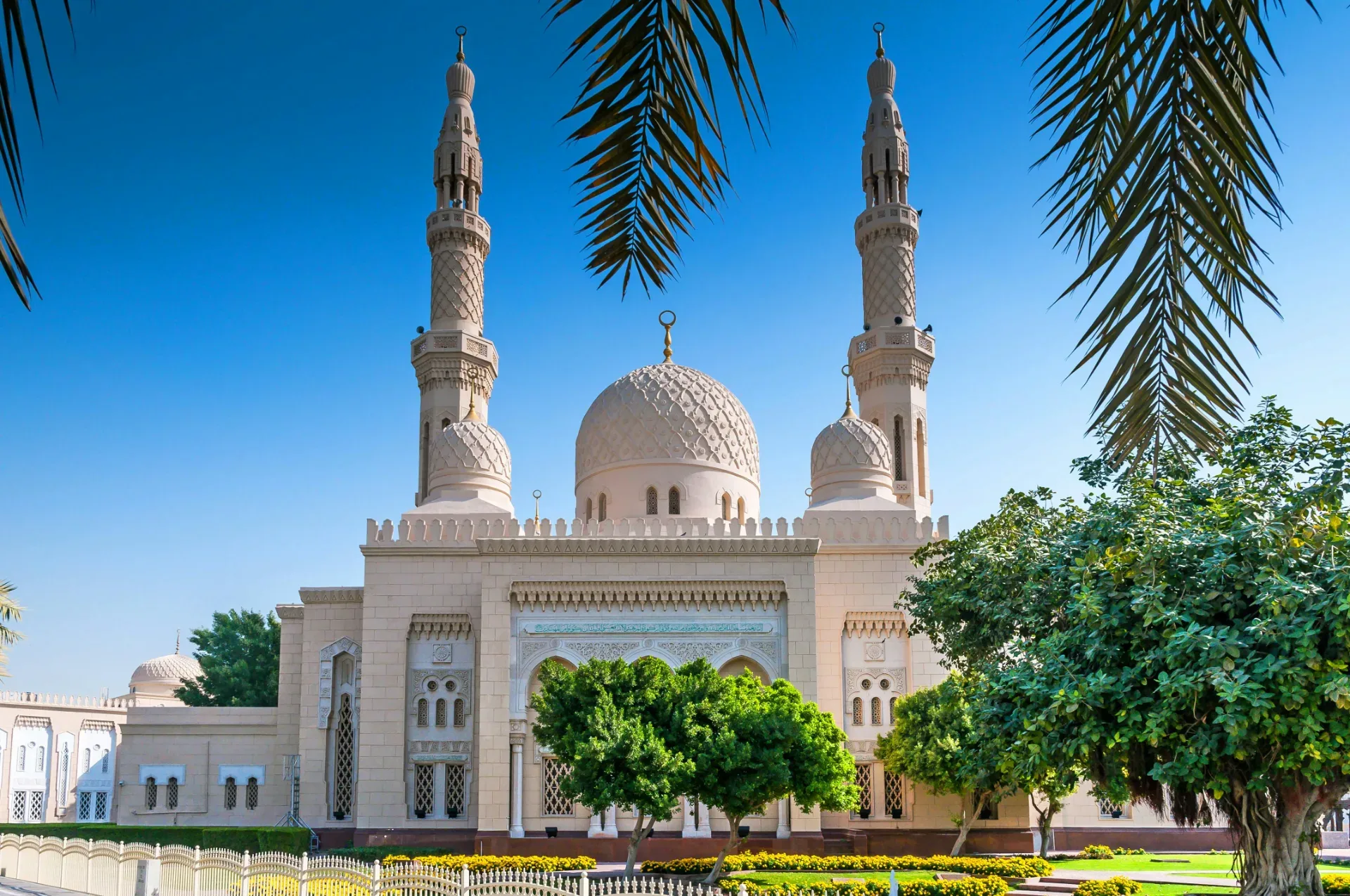
Visit Jumeirah Mosque
Jumeirah. Guided tours Saturday to Thursday at 10 AM and 2 PM. No booking needed.
Jumeirah Mosque is one of the most beautiful mosques in Dubai, and one of the few that welcomes non-Muslim visitors on guided tours. Built from white stone in the medieval Fatimid style, it opened in 1979 as a gift from the late Sheikh Rashid bin Saeed Al Maktoum and holds around 1,500 worshippers.
The tours are run by the SMCCU and follow the same open, friendly spirit as its cultural meals. A guide walks you through the mosque, explains the basics of Islam and prayer, and finishes with a relaxed question and answer session.
Good to know. Registration opens 30 minutes before each tour, so arrive a little early. Modest dress is required, covering arms and legs, and women should bring a scarf to cover their hair. If you forget, traditional clothing is available to borrow on site. Tours do not run on Fridays. Check the mosque's official website for the current fee before you go.
Etiquette. Shoes come off before entering the prayer hall. Photos are welcome, but it is kind to ask before photographing anyone at prayer.

Watch Camel Racing at Al Marmoom
Al Marmoom Camel Racetrack, Dubai Al Ain Road. Free to watch. Races in the early morning.
Camel racing is one of the oldest sports in the Arabian Peninsula, and watching it in person is unforgettable. Dozens of camels thunder down the sand track at speeds of up to 40 kilometres an hour, while their trainers race alongside in 4x4s.
The most surprising detail is the jockeys. They are small robots, strapped to the camels' backs and controlled by remote from the cars, with trainers shouting encouragement through speakers. It is a fascinating mix of ancient tradition and modern technology, and it feels very Dubai.
When to go. The racing season typically runs from around September or October to March. Races are held in the early morning, and the schedule changes from day to day.
Good to know. Check the race calendar on the Dubai Camel Racing Club website or app before you go, since race days are announced individually. Entry is free. The track is around 40 minutes from Downtown by car, so driving or a taxi is the easiest option. Bring a hat, sunglasses, sunscreen, and water.
Make a morning of it. Al Marmoom is also home to the desert lakes and cycling tracks of Al Qudra Lakes, so you can easily combine the two.

Meet a Falcon
The falcon is the national bird of the UAE, and falconry is a tradition passed down through generations of Bedouin families. Falcons were once essential for hunting in the desert, and today they remain a deeply respected symbol of heritage, skill, and patience.
Where to experience it. Several operators offer falconry experiences in the Dubai Desert Conservation Reserve, a protected area of dunes and wildlife inside the emirate. Morning experiences usually include a live falconry display, a chance to hold a falcon on a gloved arm, and a talk on how falcons are trained. Many combine it with a nature drive to spot oryx and gazelles, and a traditional breakfast at a desert camp.
Many desert safaris also include a short falcon show, but a dedicated falconry experience goes much deeper. Our guide on how to choose a desert safari explains the difference between the options.
Good to know. Morning sessions are the most comfortable and the best time to see falcons flying. Book in advance, since group sizes are kept small.
More Ways to Explore Emirati Heritage
Al Fahidi Historical Neighbourhood. Narrow lanes, wind tower houses, small museums, and galleries. It is the perfect place to start, and our Old Dubai walking route shows you how to explore it step by step.
Al Shindagha Museum. On the Bur Dubai side of the creek, this museum tells the story of Dubai, from its pearling and trading past to the modern city, and includes a beautiful Perfume House dedicated to Emirati fragrance traditions.
Etihad Museum. A striking museum dedicated to the founding of the UAE, built beside the place where the union of the emirates was signed.
The souks. Gold, spices, perfumes, and textiles traded on the same streets for generations. Our Dubai souks guide covers what to buy where and how to bargain.
Hatta Heritage Village. A restored mountain village with traditional houses, a fort, and watchtowers. A lovely cultural stop on a Hatta day trip.
A Few Words on Local Etiquette
Emiratis are known for their generous hospitality, and a little cultural awareness goes a long way.
Dress modestly in traditional settings. In mosques, heritage areas, and cultural centres, covering shoulders and knees is respectful and appreciated.
Greet with warmth. A simple "As-salamu alaykum" (peace be upon you) is always welcomed. The reply is "Wa alaykum as-salam".
Accept hospitality. If you are offered coffee or dates, accepting is a lovely gesture. Take your cup with your right hand.
Ask before photographing people. Most people are happy to say yes, and asking first is always appreciated.
Be mindful during Ramadan. During the holy month, it is respectful to keep eating and drinking discreet in public during fasting hours, and to enjoy the special atmosphere of the season.
Final Takeaway
The heart of Dubai is in its people and traditions. Share a meal and real conversation with Emirati hosts, step inside Jumeirah Mosque, watch robot jockeyed camels race across the sand at Al Marmoom, and feel the grip of a falcon on your arm in the desert.
These are the moments that turn a visit into a connection. Add even one of them to your plans, and you will see Dubai in a completely new light.
You can browse every attraction in Dubai with live opening hours on Day & Night Dubai.