Dubai's Souks Beyond Gold and Spices: What to Buy Where, and How to Bargain
Dubai souks guide: what to buy at the Gold, Spice, Perfume and Textile Souks, where to eat fresh seafood, and how to bargain with a smile.
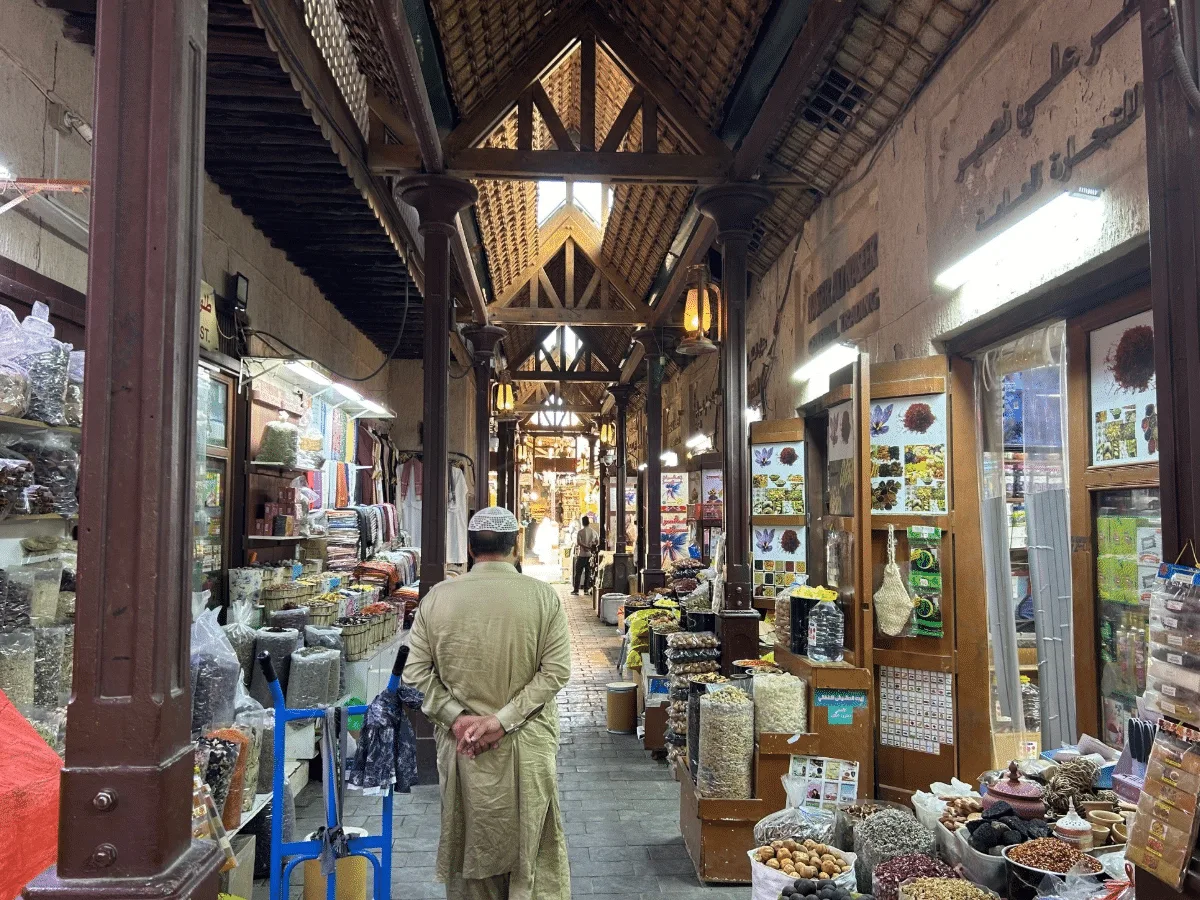
Long before the malls, Dubai was a trading port, and the souks are where that history is still alive. Gold traders, spice merchants, perfumers, and fabric sellers still work the same streets along the creek, and a morning among them is one of the most memorable things you can do in the city.
Most visitors see the Gold Souk and the Spice Souk and stop there. There is so much more to discover. Each souk has its own speciality, its own rhythm, and its own way of doing business. Here is what each one is best for, and how to enjoy shopping in them like someone who has done it many times before.
Two Kinds of Souk
Before you set off, it helps to know that Dubai has two very different kinds of souk.
Traditional souks sit in Deira and Bur Dubai, on either side of the creek. Narrow lanes, small independent traders, and prices that are often open to friendly negotiation.
Modern souks like Souk Madinat Jumeirah and Souk Al Bahar recreate the look of a traditional market, with arches, lanterns, and carved wooden details, but they work more like a mall. Prices are usually fixed, and the focus is on souvenirs, dining, and atmosphere.
Both are worth your time. They simply offer different experiences, and the best souk day often includes a little of each.
The Gold Souk
Deira. Around 10 AM to 10 PM daily, opening later on Fridays.
The most famous souk in Dubai, and for good reason. More than 350 retailers line a covered arcade, their windows filled with necklaces, bangles, rings, and bridal sets in quantities that are genuinely hard to take in. Alongside the gold you will find diamonds, platinum, silver, and precious stones.
How pricing works. Gold here is sold by weight, based on the day's gold rate, which most shops display clearly. On top of that comes a making charge for the craftsmanship of each piece. The making charge is where the conversation happens, and where a friendly negotiation can make a real difference to the final price.
Best buys. 22 karat and 18 karat jewellery, custom pieces, and gold coins or small bars for anyone buying gold as gold.
Good to know. Ask for an itemised receipt showing the weight, the purity, and the making charge. Reputable shops are happy to provide one, and it makes comparing prices between stores much easier.
Browsing is completely free, and simply walking the arcade is an experience in itself. Many visitors buy nothing and still count it among their favourite moments in Dubai.
The Spice Souk
Deira, a short walk from the Gold Souk. Around 8 or 9 AM to 9 PM.
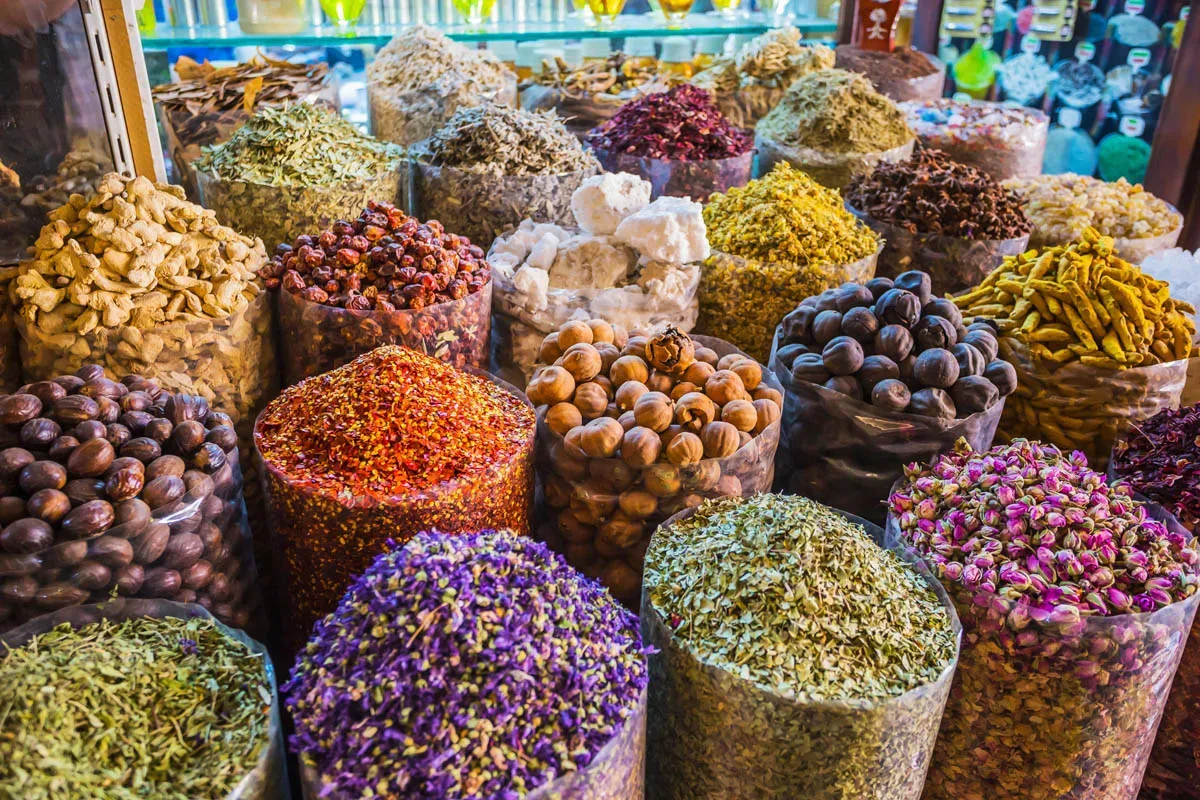
You will smell it before you see it. Open sacks of saffron, cardamom, dried lemon, cinnamon bark, chillies, dried rosebuds, and frankincense spill into the lanes, alongside loose teas, nuts, and dried fruit in every colour you can imagine.
Traders will warmly invite you in, offer you a sniff of this and a taste of that, and tell you the story behind each spice. Enjoy it. That conversation is part of the experience.
Best buys. Saffron, frankincense, dried limes, rose and hibiscus teas, and house spice blends for Middle Eastern cooking.
Good to know. Buy small quantities so your spices stay fresh, and feel free to ask to smell or taste before you buy. Good traders are proud of their stock and happy to show it off.
The Perfume Souk
Sikkat Al Khail Street, Deira, a short walk from the Gold Souk. Around 9 or 10 AM to 10 PM.
A string of small shops along one street, each lined with glass bottles, wooden boxes, and incense burners. This is where you discover the Arabian approach to fragrance, which is richer, deeper, and longer lasting than most of what you find in a department store.
Best buys. Oud, attar oils, bakhoor incense, and traditional Arabian perfumes. Many shops will also create a custom blend for you on the spot, mixing oils until you land on a scent you love. It makes a wonderful personal souvenir.
Good to know. Test on your skin rather than on paper, and give it a few minutes before deciding. Oil based perfumes open up and change as they warm, so the scent you fall for after ten minutes may be different from the first impression.
The Textile Souk
Bur Dubai, across the creek from Deira. Around 9 AM to 9 or 10 PM, opening later on Fridays.
Under a beautifully restored wooden arcade on the Bur Dubai side, the Textile Souk is the calmer, more relaxed sibling of the Deira souks. Bolts of silk, cotton, and embroidered fabric line the shopfronts, along with pashminas, scarves, and traditional clothing.
Best buys. Pashminas and scarves, fabric by the metre, and traditional garments. Some shops can also point you toward local tailors who will make something to measure.
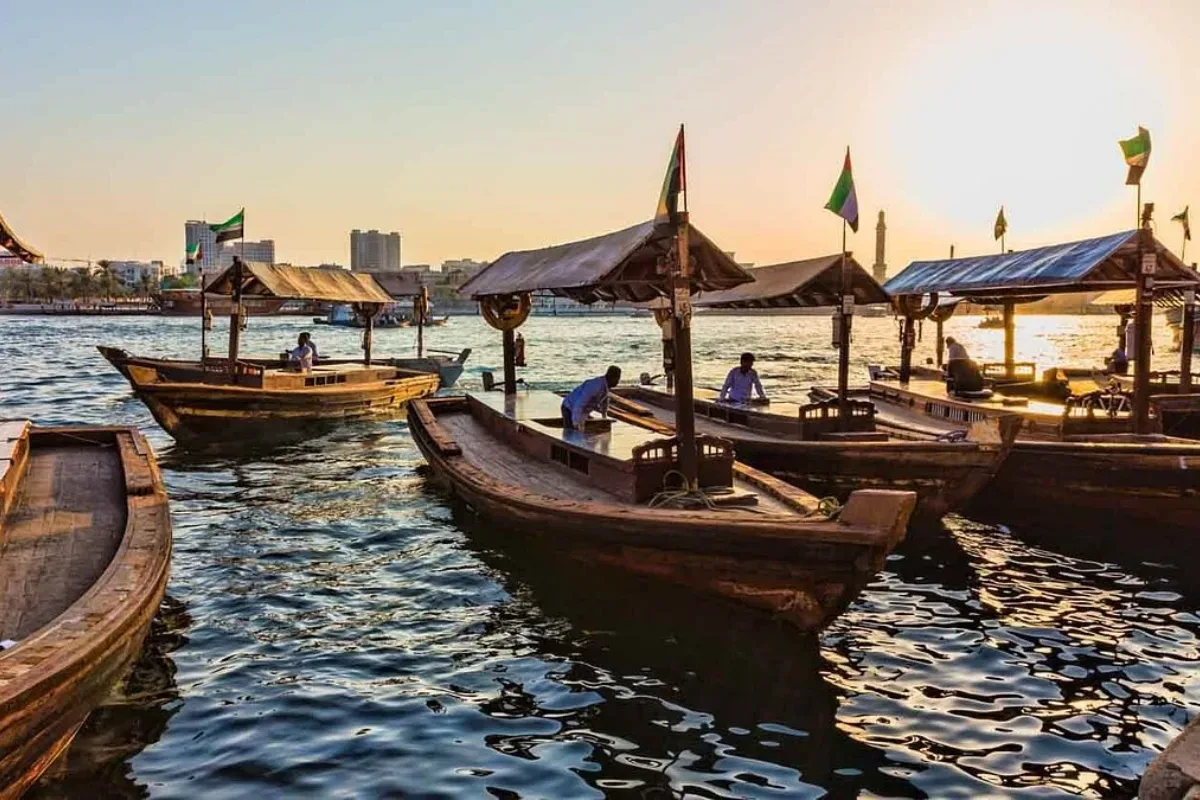
Good to know. The best way to arrive is by abra, the traditional wooden boat that crosses the creek for one dirham. See our Dubai Creek abra crossing page for how it works.
Naif Souk
Deira. Open until late, with later opening on Fridays.
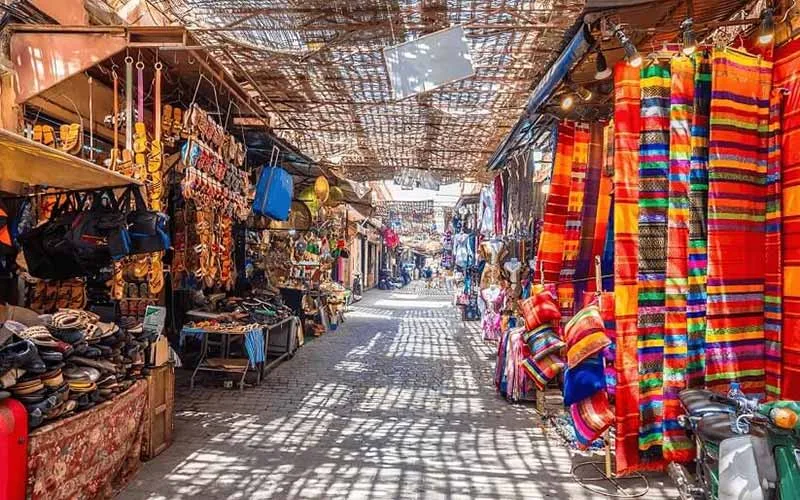
This is where Dubai residents actually shop. Naif Souk is a lively, everyday market for clothing, abayas, textiles, household goods, toys, shoes, and accessories, all at local prices.
It is less about souvenirs and more about seeing the city's daily commercial life up close. If you enjoy markets that feel lived in rather than staged, Naif Souk is a real highlight, and among the best value shopping anywhere in Dubai.
Good to know. Prices are already modest, but a friendly bit of bargaining is still part of the culture here, especially when buying several items.
The Waterfront Market
Deira Corniche. Open 24 hours, with short breaks for cleaning.
The modern successor to the old Deira fish market, and one of the most fascinating places in the city to see how Dubai eats. Around 500 vendors sell more than 350 varieties of fish and seafood, alongside fresh fruit, vegetables, meat, dates, and spices.
The experience to try. Choose your fish at the seafood hall, take it to the cleaning and cutting stalls where it is prepared for a small fee, then carry it to one of the market's restaurants to have it cooked exactly how you like. It is one of the freshest and most memorable meals you can have in Dubai.
Good to know. Entry is free and parking is available on site. Bring some cash, since many of the fish stalls prefer it, and go in the morning when the catch is freshest and the market is at its busiest and most colourful.
Souk Madinat Jumeirah
Jumeirah. Around 10 AM to 11 PM.
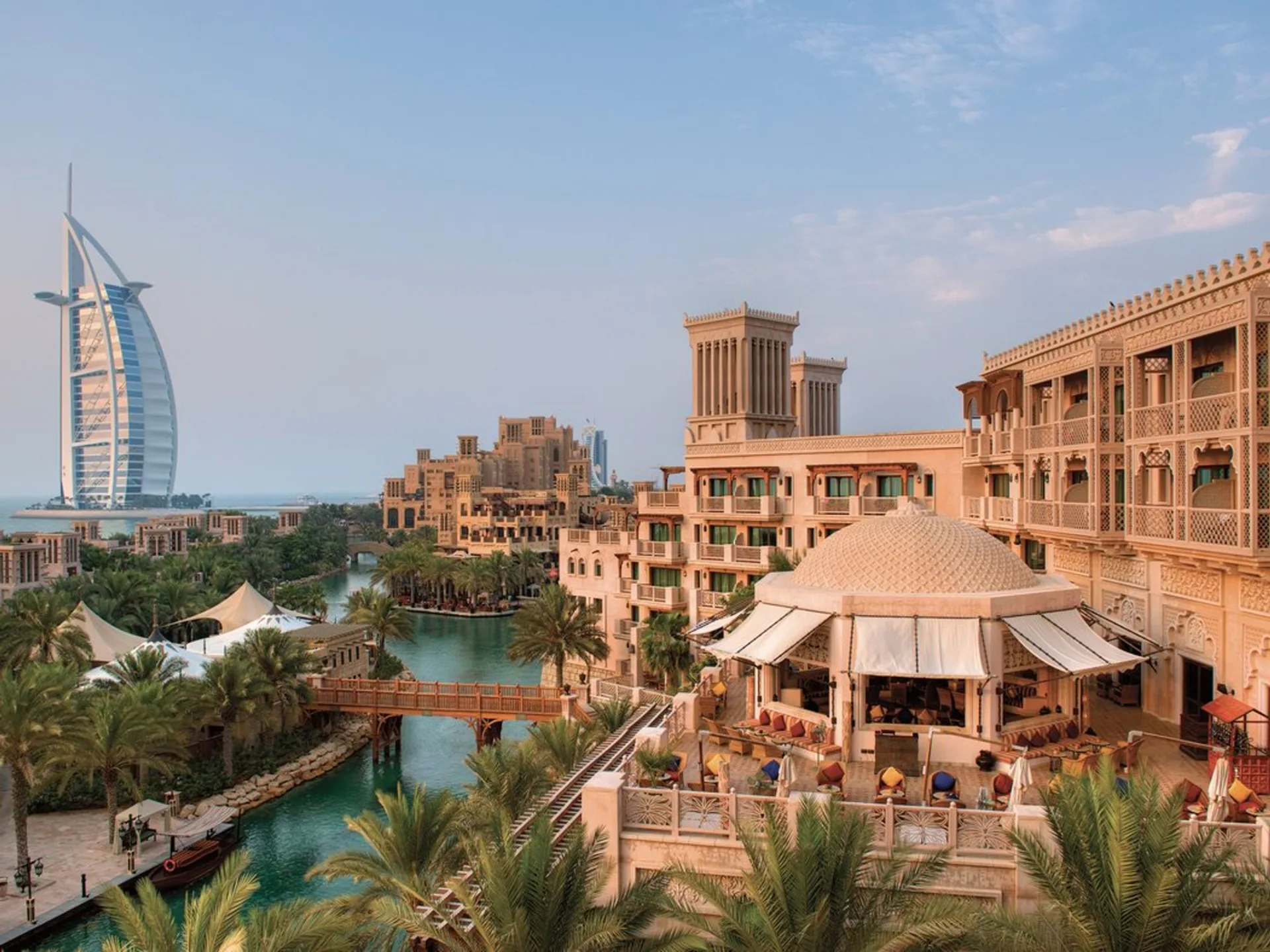
A modern souk set among canals and wind towers, with views of the Burj Al Arab and a beautiful, relaxed atmosphere. The shops lean toward handicrafts, art, lanterns, textiles, and quality souvenirs, with fixed prices and lots of restaurants and cafes along the waterways.
It is the perfect choice if you want the look and feel of a souk without the bargaining, and it pairs wonderfully with the Madinat Jumeirah abra ride through the resort's canals.
In Downtown, Souk Al Bahar offers a similar experience right beside the Dubai Fountain, with arched walkways, small shops, and waterfront dining.
How Bargaining Works
Bargaining in Dubai's traditional souks is a friendly, social exchange, and once you get the hang of it, it becomes one of the most enjoyable parts of the day.
Know where it applies. In the traditional souks, prices for souvenirs, textiles, spices, perfumes, and the making charge on gold are usually open to negotiation. In modern souks and malls, prices are fixed.
Keep it warm. A smile, a greeting, and genuine interest go a long way. Traders enjoy a good conversation, and a relaxed approach almost always leads to a better price.
Have a price in mind. Decide what the item is worth to you before you start, so you can enjoy the back and forth without second guessing yourself.
Start lower and meet in the middle. Offer a little below what you hope to pay, and let the conversation find its way to a price that works for both of you.
Buy more, save more. Buying several items from the same trader is one of the easiest ways to a better deal.
Carry some cash. Many shops accept cards, but cash is handy for small purchases and can help with the final price.
Walking away is perfectly fine. If you cannot agree, thank the trader and move on. It is a normal part of the process, and sometimes it is exactly what brings the best offer.
One more thing worth knowing. Selling counterfeit goods is illegal in the UAE, so if someone offers to show you designer copies in a back room, simply smile and decline.
When to Go
Mornings are the calmest. Most souks open between 9 and 10 AM, and the first couple of hours are relaxed, cooler, and perfect for browsing and photos.
Fridays start later. Many traditional souk shops open in the afternoon on Fridays, after Friday prayers. Modern souks like Souk Madinat Jumeirah are open throughout the day.
Some traders take an afternoon break. In the traditional souks, a few shops pause in the early afternoon before reopening.
Hours shift during Ramadan. Opening times change during the holy month, so check ahead if you are visiting then.
October to April is the most comfortable season. The traditional souks involve a fair amount of walking between covered and open areas. In the warmer months, go early in the morning and enjoy the shade of the covered lanes.
A Simple Souk Route
You can see the best of the traditional souks in a single relaxed morning, all on foot apart from one short boat ride.
Start at the Gold Souk in Deira and take your time along the arcade.
Walk to the Perfume Souk on Sikkat Al Khail Street, just a few minutes away.
Continue to the Spice Souk, following the scent toward the creek.
Cross the creek by abra to Bur Dubai for one dirham.
Finish at the Textile Souk, then wander into the Al Fahidi Historical Neighbourhood next door.
For a full version of this walk with more stops, see our Old Dubai walking route, and for every boat option on the water, our guide to every abra ride in Dubai.
The Waterfront Market works best as its own trip by taxi, ideally for a long seafood lunch. And if you love photography, the souks are among the best photo spots in Dubai. A friendly word before photographing a trader or their stall is always appreciated.
Final Takeaway
Each of Dubai's souks has its own character. The Gold Souk dazzles, the Spice Souk fills every sense, the Perfume Souk lets you create a scent that is yours alone, and the Textile Souk offers a gentler pace across the water. Naif Souk shows you everyday Dubai, the Waterfront Market turns shopping into a meal, and Souk Madinat Jumeirah wraps it all in a polished, relaxed setting.
Go in the morning, bring some cash, bargain with a smile, and leave a little room in your suitcase. You will want it.
You can browse every attraction in Dubai with live opening hours on Day & Night Dubai.