How to Choose a Desert Safari in Dubai Without Getting It Wrong
Desert safaris in Dubai run from AED 130 to over AED 700. The price gap is not about quality, it is about two different products. Here is how to tell them apart.
A desert safari is the second most booked activity in Dubai after Burj Khalifa, and it is the one people most often book badly.
Part of the problem is that prices run from around AED 130 to well over AED 700 for something described in nearly identical language on every website. Dune bashing, camel ride, sandboarding, BBQ dinner, belly dancing. The listings look interchangeable. They are not.
The other part of the problem is that almost every page you will find on this topic was written by a company selling one specific safari. That makes honest comparison genuinely hard to find.
So here is the thing nobody selling you a tour will lead with.
The Price Gap Is Not a Quality Ladder
The single most useful thing to understand before booking is that Dubai desert safaris split into two fundamentally different products, and they happen in two different places.
The Commercial Desert
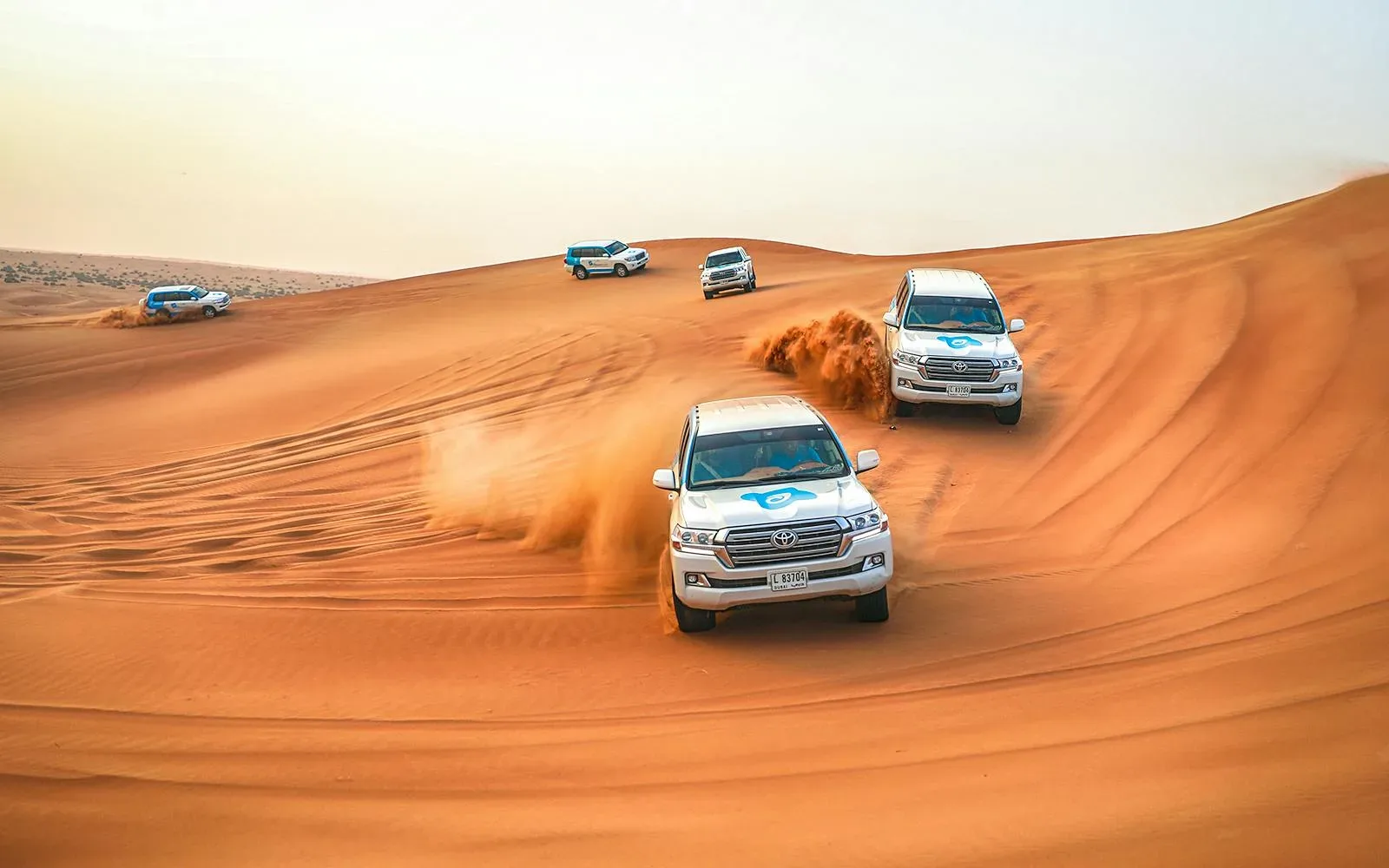
Most safaris operate in the Lahbab and Al Awir desert areas. Lahbab is the famous red dune region, and its sand carries a high iron oxide content that gives it the deep red colour and the firmer grip that makes for better dune driving and better photographs.
This is where nearly every tour in the AED 130 to AED 250 range goes. Camps here are larger, groups are bigger, and multiple operators run adjacent sites. On a busy winter evening you will be one of several hundred people at a camp, and you will see other convoys during the drive.
None of that makes it a bad product. A licensed operator with a trained driver in Lahbab delivers the full experience for roughly a third of the price of the alternative, and for most first time visitors it is genuinely the right choice.
The Dubai Desert Conservation Reserve
The DDCR is a protected area covering roughly 225 square kilometres, around five percent of Dubai's total land area. You cannot enter it independently. Access is restricted to a small number of permitted operators, and both vehicle numbers and routes are capped inside the reserve.
That cap is the entire point. One permitted operator limits daily visitors to around 200 people across the whole 225 square kilometre reserve. The difference in what you actually see is significant: intact desert with native wildlife, no other convoys, and no distant camp lights.
Reserve tours typically start from around AED 400 and go up considerably from there.
Why This Matters
These are different experiences, not better and worse versions of one thing.
The commercial desert delivers activity and atmosphere. Dune bashing, quad bikes, a big camp, live entertainment, a buffet, plenty of noise and energy.
The reserve delivers quiet and landscape. Wildlife drives, falconry, small groups, and desert that has not been driven over by fifty vehicles that afternoon. What it generally does not deliver is the high adrenaline dune bashing, because aggressive off-track driving is exactly what the reserve exists to prevent.
Decide which of those you actually want before you look at a single price. People who book a cheap Lahbab safari expecting silence and wildlife come away disappointed. So do people who pay AED 500 for a reserve tour expecting a rollercoaster in a Land Cruiser.
What Each Price Tier Actually Buys
Prices shift with season and promotions, but the structure holds.
Around AED 130 to 250, shared evening safari. The standard product. Hotel pickup in a shared 4x4, roughly 15 to 20 minutes of dune bashing, a sunset photo stop, camel ride, sandboarding, henna, BBQ buffet at a Bedouin style camp, and live entertainment. This is what most people book and it covers the experience properly. Our evening desert safari page has the full inclusion list and typical pickup windows.
Around AED 250 to 500, premium shared. The meaningful upgrades here are smaller vehicle groups, often four passengers rather than six or seven, and noticeably longer dune driving, closer to 45 minutes. Better camp facilities, better food, reserved seating. The dune bashing difference is the one that changes the experience most, because a driver working with a small group can adjust to what people actually want instead of running a fixed timed script.
Around AED 400 and up, conservation reserve. As described above. Different product entirely.
Around AED 100 to 150, morning safari. Shorter, no dinner, no evening entertainment. Genuinely good value if you want the dunes and the landscape without committing an entire evening, and the only sensible option in peak summer. See the full morning desert safari breakdown for timings and what is included.
Around AED 350 to 700, overnight. Everything in an evening safari plus camping, bonfire, stargazing, sunrise, and breakfast. The stargazing is the actual draw, and it is substantially better away from the larger camps. Options run from traditional Bedouin camps to architect designed eco lodges, covered in more detail on our desert overnight page.
Around AED 650 to 1,200 per vehicle, private. Priced per 4x4 rather than per person, typically up to six passengers. For a family or group of five or six, this frequently works out cheaper per head than premium shared tickets while delivering a better experience.
How to Read a Listing Properly
Every operator uses the same vocabulary. The words do not mean the same things.
Check the dune bashing duration, not just its presence. Fifteen minutes and forty five minutes are described identically in most listings. Ask directly if it is not stated.
Check the group size per vehicle. Six or seven passengers in a Land Cruiser is standard. Four is a genuine upgrade. Anything vague is usually the higher number.
Check what is included versus available. Quad biking and dune buggies and camel rides are frequently listed as features when they are paid extras at the camp. This is the most common source of unexpected spend on the day. If any of these matter to you, it is often better value to book them as standalone activities than to buy them as camp upsells.
Check the camp location. A listing that never names its camp or desert area is worth a follow up question.
Check whether pickup covers your hotel. Distant areas sometimes carry a surcharge, and some listings quote a price that assumes central pickup only.
Book direct or online rather than at a counter. Online rates typically run 10 to 20 percent below walk up prices, and you get to pick your slot.
Warning Signs Worth Taking Seriously
Prices well below the market floor. A shared evening safari advertised at AED 79 is recovering the difference somewhere, usually through shortened dune time, oversold vehicles, or aggressive upselling at the camp.
Vague conservation language. Operators genuinely working inside the reserve say so specifically and name the reserve. Phrases like "eco friendly desert experience" or "we support nature" with no named protected area partnership mean nothing.
No stated group size limits. Legitimate premium operators state their caps because it is what you are paying for.
Wildlife interaction as a selling point. Handling or close approach to desert animals for photographs is a red flag, not a feature.
No verifiable license. Operators should hold a Dubai Department of Economy and Tourism license. There is no separate public register of "safari permits", so the tourism license and the camp permit are what actually matter.
Timing: Season and Hour
November to March is peak season. Best weather by a wide margin, and prices run roughly 15 to 25 percent higher than summer rates. Camps are also at their busiest, particularly on weekends.
June to September is cheap but demanding. Discounts are substantial. The trade off is heat, and it is serious. If you go in summer, take a morning safari departing at sunrise, or an evening safari that starts late. An afternoon departure in July is genuinely unpleasant and no discount fixes that.
Morning departures are consistently underrated. Cooler, quieter, better light for photography, and wildlife is most active in the early hours. You lose the dinner and the entertainment, but if the desert itself is what you came for, morning is often the better call.
Weekdays beat weekends. Smaller crowds at the camps and slightly lower prices.
One Thing to Consider Before You Book Anything
If your priority is dunes and desert scenery rather than the packaged experience, you do have another option.
Areas including Al Qudra, Al Badayer, and Fossil Rock are open for independent access, and Al Qudra in particular has cycling tracks, lakes, and open desert reachable by ordinary car with no tour required. It costs nothing.
There is also Al Marmoom Camel Racetrack, where traditional camel races run at sunrise through the winter season with free entry for visitors. It is an authentic Emirati sporting event rather than a tourist production, and almost nobody outside the region knows it is open to the public.
That is not a substitute for a safari, and driving into deep dunes without experience is genuinely dangerous, so this is not a recommendation to attempt off-roading yourself. But if what you actually want is to stand in the desert at sunrise or sunset rather than to be entertained in it, free options exist and very few people mention them.
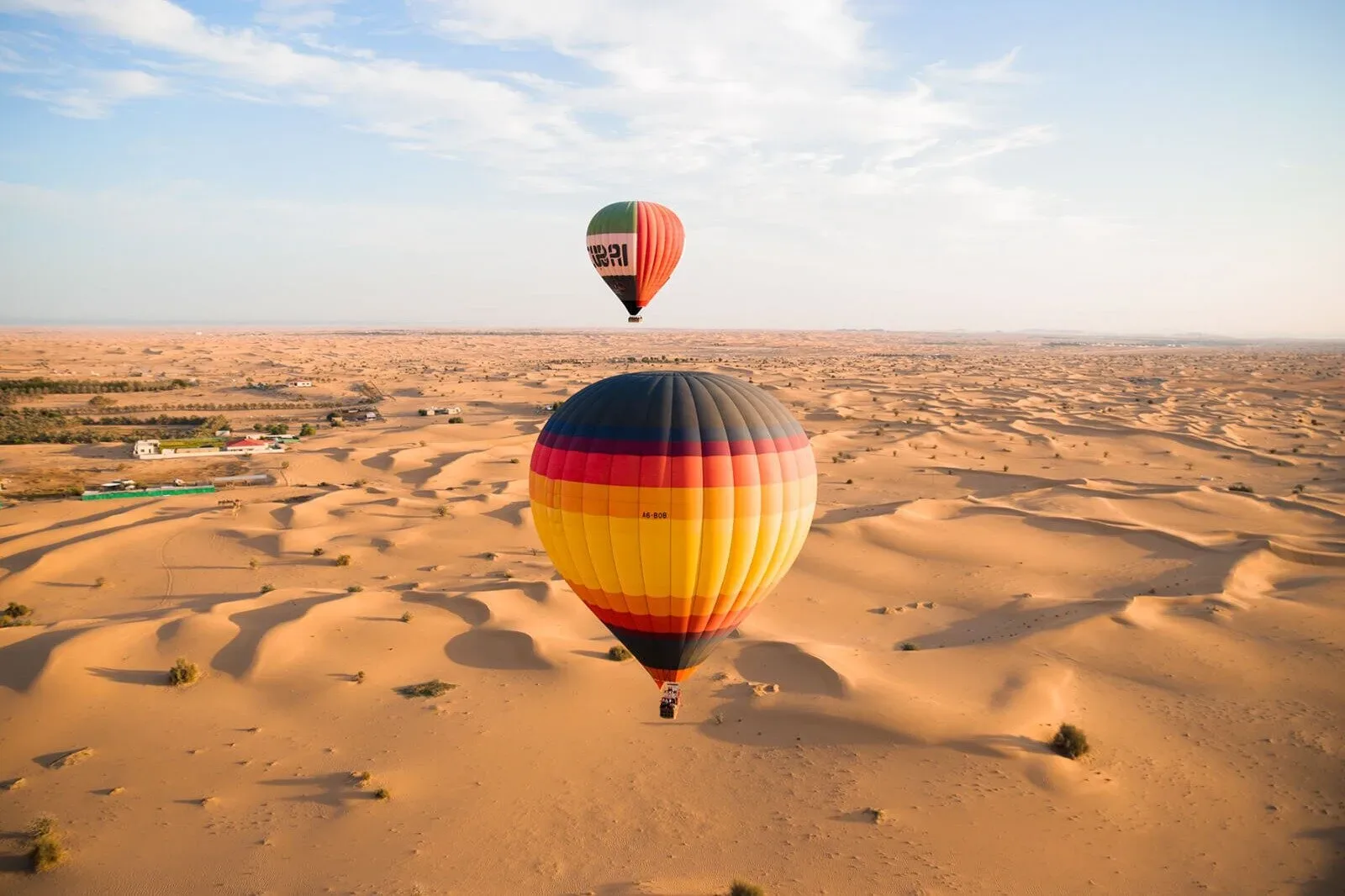
At the other end of the scale, a hot air balloon flight over the conservation reserve is a completely different way to see the same landscape, and worth considering if the desert itself is the reason for the trip.
The Short Version
Work out which product you want first. Activity and atmosphere means a licensed Lahbab or Al Awir camp, and the AED 150 to 250 tier covers it well. Quiet and landscape means a conservation reserve operator, and you should expect to pay from AED 400.
Within whichever you pick, the things worth paying more for are dune bashing duration and vehicle group size. The things not worth paying more for are camp extras you can decline on the day.
And whatever you book, go in the morning or start late in the evening. That single decision affects the experience more than the price tier does.
You can browse every desert experience in Dubai with current timings and opening status, filtered by day or night, on Day & Night Dubai.
Find more of the city and everything around it, day and night, on Day & Night Dubai.