Getting Around Dubai: Metro, Taxis, Nol Cards and the Fines Nobody Warns You About
Which Nol card to buy, what the Metro and taxis really cost, when an app beats a taxi, and the Metro fines that catch visitors out.
Dubai is easy to get around once you understand it, and surprisingly expensive if you do not. The city stretches along the coast, the main areas sit a long way apart, and walking between them is not realistic for most of the year.
The good news is that public transport is clean, cheap, and reliable, and taxis are reasonably priced by international standards. The bad news is that the Metro has rules that most visitors have never heard of, and the fines are real.
Here is how it all works.
The Short Version
For most trips between major areas, the Metro is the cheapest and most predictable option.
For short hops, groups, or late nights, a taxi is easiest.
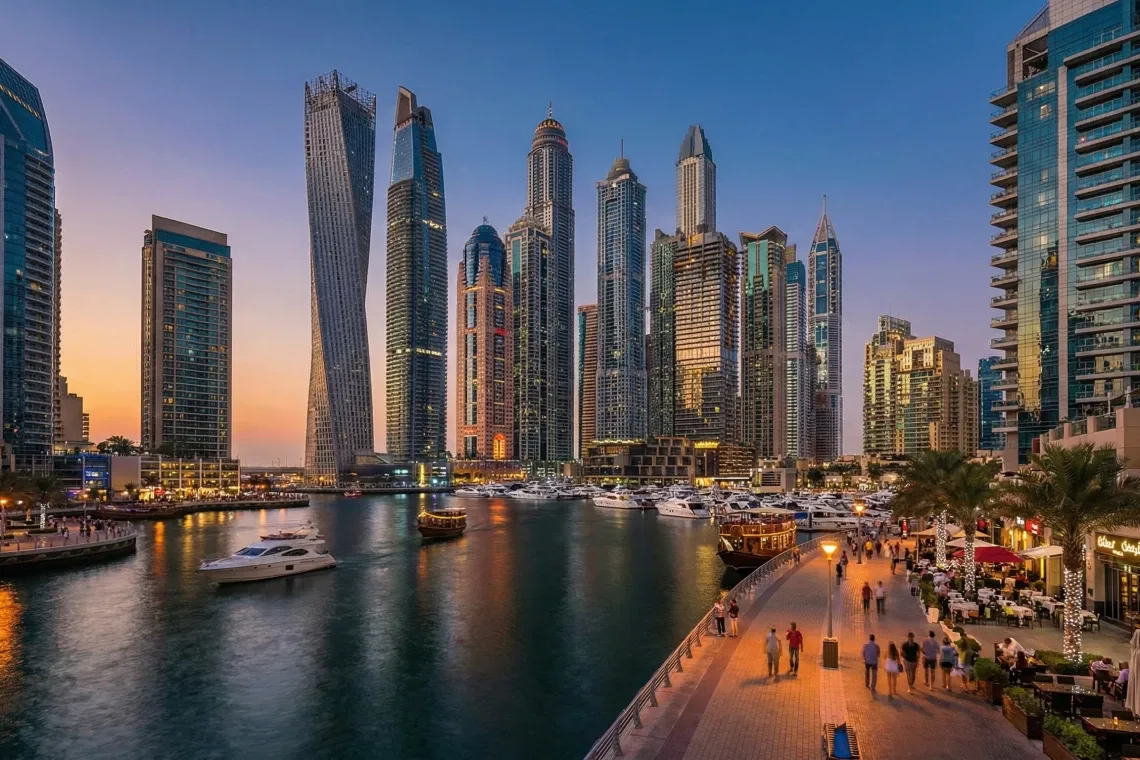
For the Marina, JBR, and the Palm, you will use the tram or monorail to connect to the Metro.
For crossing the creek in Old Dubai, take the abra for one dirham.
For Hatta, Al Qudra, or anywhere outside the city, you need a car or a tour.
The Metro
Two Lines
The Red Line is the one most visitors use. It runs from the airport at Terminals 1 and 3, through Deira, along Sheikh Zayed Road past Downtown and Business Bay, and on to Dubai Marina.
The Green Line serves the older parts of the city around Deira and Bur Dubai, including Al Fahidi.
Terminal 2 at the airport has no Metro station, and there is no Metro on Palm Jumeirah.
Which Nol Card to Buy
You need a Nol card to ride. There are a few types, and picking the right one saves money.
Red Ticket. A paper card costing AED 2, then loaded with fares of around AED 4 to 8.50 per trip depending on distance. Fine for one or two journeys.
Silver Card. AED 25, of which AED 19 is usable credit. Trips cost AED 3, AED 5, or AED 7.50 depending on how many zones you cross. It is valid for five years and also works on the tram, buses, and water buses.
Gold Card. Also AED 25 with AED 19 credit, but it gives you access to Gold Class, where fares are double the Silver price.
If you plan to make more than a couple of trips, buy a Silver card. It is cheaper per trip than the Red Ticket, and the card pays for itself quickly. Children under 5 travel free.
You can buy and top up cards at station ticket offices and machines.
The Cabins
Gold Class is at the front of the train. Wider seats, fewer people, and a view out of the front window. You need a Gold card or Gold ticket.
Women and Children cabins are reserved for women and children only.
Regular cabins make up the rest of the train.
Hours
The Metro runs roughly from early morning until around midnight, with later service on some nights of the week. Hours vary by day, so check the schedule if you are travelling very early or late, for example to catch a flight.
The Metro Fines Nobody Warns You About
Inspectors check, and fines are issued on the spot. The ones that catch visitors most often:
Eating or drinking. Not allowed on trains or platforms, and that includes water. The fine is around AED 100.
Sitting in Gold Class on a Silver card. Also around AED 100. Upgrading to Gold before you board costs far less.
Men in the Women and Children cabin. It is clearly marked, but tired visitors walk in all the time.
Travelling without enough credit. Your card is rejected at the gate. Top up before you travel, not at the platform during rush hour.
Chewing gum and sleeping on the train are also against the rules. None of this is complicated, but it is worth knowing before you board with a coffee in your hand.
The Tram and the Monorail
The Dubai Tram runs through Dubai Marina and JBR and connects to the Metro. If you are staying in the Marina or JBR, you will use it to reach the Red Line. It takes the same Nol cards.
The Palm Monorail runs along the trunk of Palm Jumeirah. Since there is no Metro on the Palm, it is the only public transport option there, though most visitors on the island use taxis.

Abras and Water Transport
Some of the best transport in Dubai is on the water.
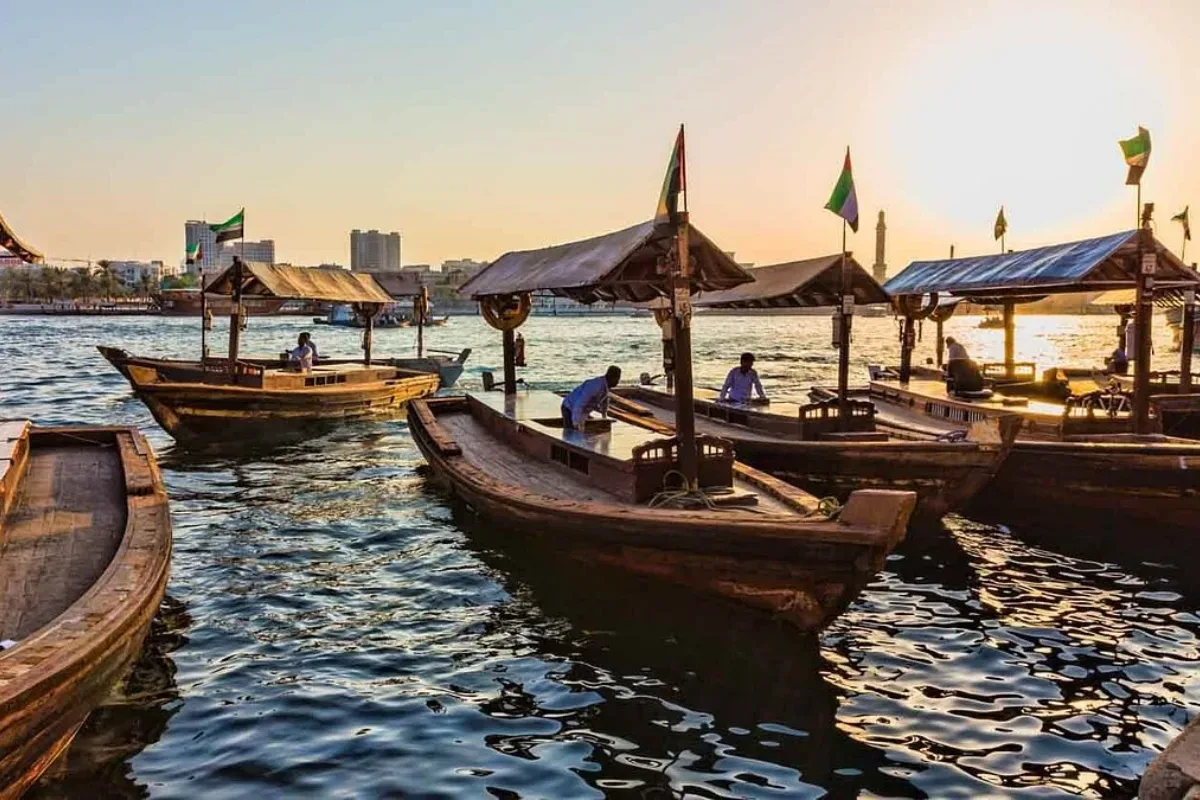
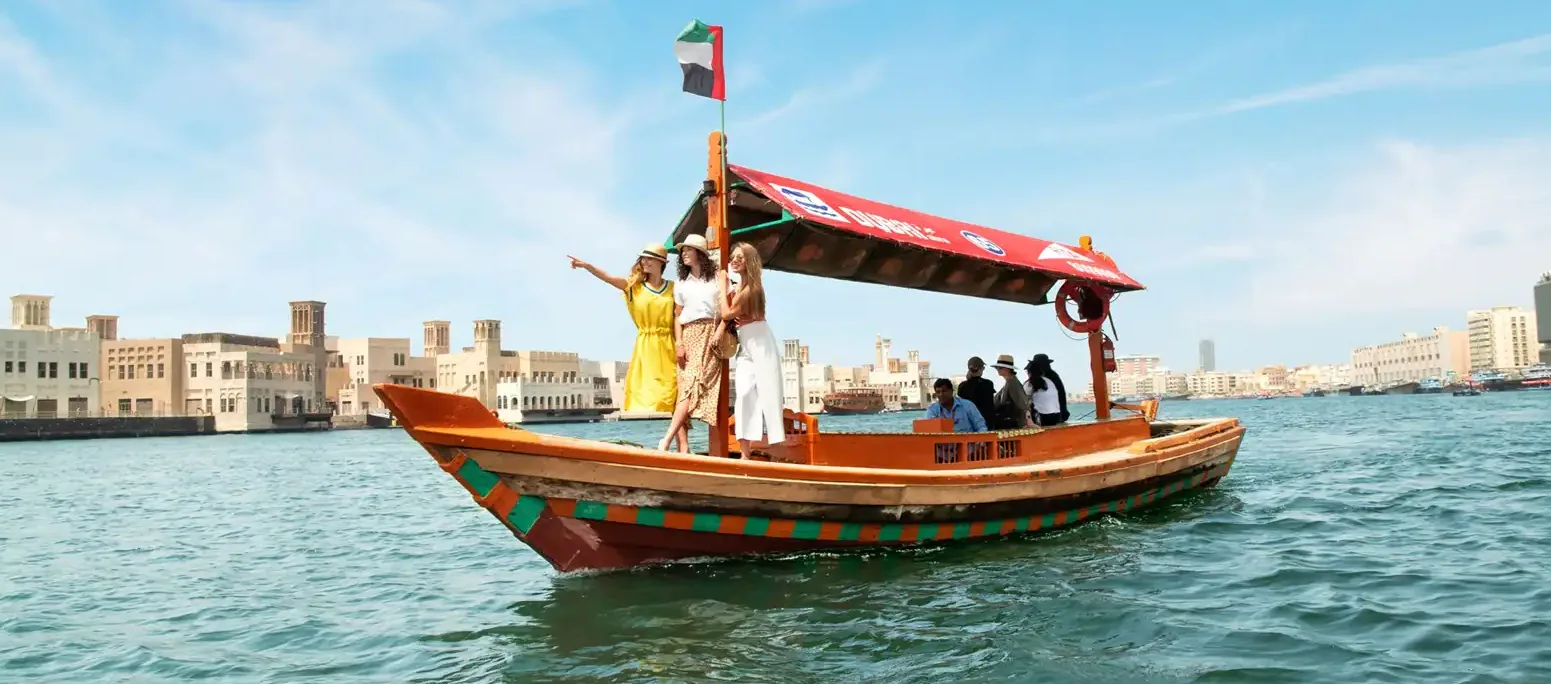
The Dubai Creek abra crosses between Bur Dubai and Deira for one dirham, paid in cash. It is the quickest way between the two halves of Old Dubai and one of the best experiences in the city. See our Dubai Creek abra crossing page.
The Dubai Marina abra crosses the Marina canal for a few dirhams on a Nol card.
The Dubai Water Canal abra runs a longer sightseeing route for around AED 25.
Our guide to every abra ride in Dubai compares all of them.
Taxis
Dubai's official taxis are run under the Roads and Transport Authority and are metered.
What They Cost
Minimum fare. AED 12 for a taxi hailed on the street, and AED 13 for one booked through an app.
From the airport. Taxis start at AED 25 at the airport.
Distance. Roughly AED 2.20 per kilometre.
Tolls. If your route passes a Salik toll gate, the toll is added to the fare.
As a rough guide, a trip from the airport to Downtown is around AED 60, and to the Marina around AED 100 to 110, depending on traffic and the route.
Taxi or App
Hala taxis through the Careem app are official RTA taxis booked through an app. They are metered and do not have surge pricing, which makes them a useful middle ground.
Uber and Careem private cars use dynamic pricing, so fares can rise sharply at busy times.
For most short trips in normal traffic, an official taxi is the cheapest option. Ride hailing apps can be more convenient at the airport and at busy times, but compare the fare before you confirm.
At the airport, app pickups often happen in a designated parking area rather than directly outside arrivals, so allow a few extra minutes.
Ladies' taxis, with pink roofs, are available for women and families.
Buses
Dubai has an extensive bus network, also paid with Nol cards, and the stops are air conditioned. Buses are the cheapest way to reach areas the Metro does not cover, but they are slower and less intuitive for visitors. They make more sense for residents than for a short trip.
Driving
Renting a car makes sense for day trips to Hatta, Al Qudra Lakes, or the desert, where public transport is not realistic. Our Hatta day trip guide and Al Qudra Lakes guide cover how to get there.
Within the city, a car is often more trouble than it is worth. Traffic is heavy at rush hour, Salik tolls add up, and parking in the busiest areas can be expensive and hard to find. Check the licence requirements for your nationality before you hire.
Walking
Dubai is more walkable than its reputation, in the right places and the right months.
Downtown around Dubai Mall, Dubai Marina along the promenade, JBR along The Walk, and Old Dubai around Al Fahidi and the souks are all pleasant on foot. Our Old Dubai walking route shows how much you can see in a single morning.
Between areas, walking is rarely practical. And from roughly May to September, even a 15 minute walk to the Metro in the midday heat is tough going.
Which Option When
Airport to the city. Metro from Terminals 1 or 3 if you are travelling light. Taxi if you have bags, are in a group, or are arriving at Terminal 2.
Downtown to the Marina. Metro on the Red Line.
Within Old Dubai. Walk and take the abra.
Short hops and late nights. Taxi.
To the Palm. Taxi, or the tram and monorail if you are not in a hurry.
Day trips outside the city. A rental car or a tour.
Where you stay makes a big difference to all of this. Our guide to where to stay in Dubai explains which areas have the best transport connections. And if you are only passing through, our Dubai layover guide covers the airport and getting into the city.
Final Takeaway
Dubai's transport is cheap and easy once you know the basics. Buy a Silver Nol card, use the Metro between areas, take the abra in Old Dubai, and use taxis for short trips and late nights. Leave the coffee off the train, stay out of the wrong cabin, and you will spend less on getting around than almost any other major city.
You can browse every attraction in Dubai with live opening hours on Day & Night Dubai.